
The Tiniest Local Ingredient in Our Kitchen

A viola can sit comfortably on the tip of your finger. It can also become the first thing you notice on a plate.
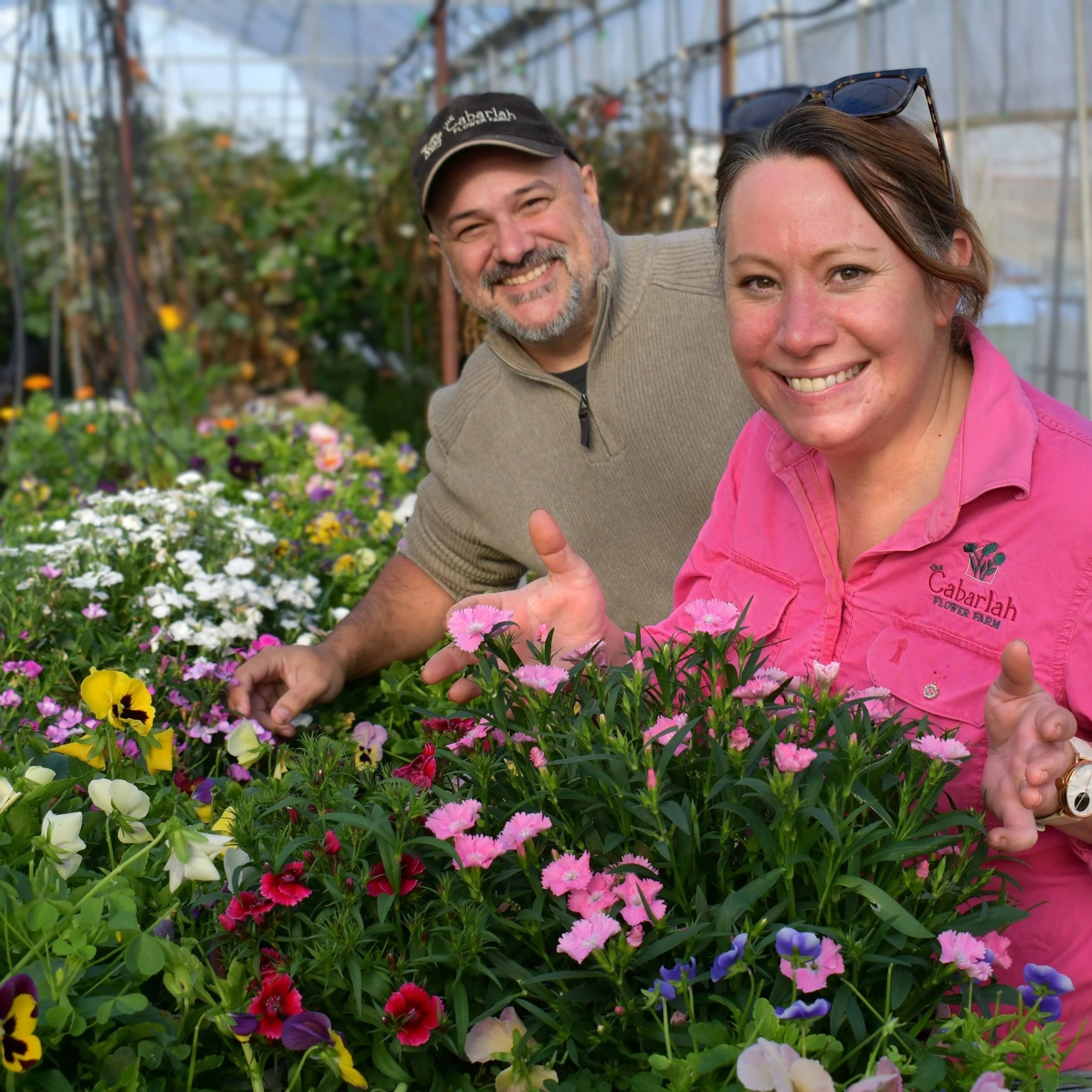
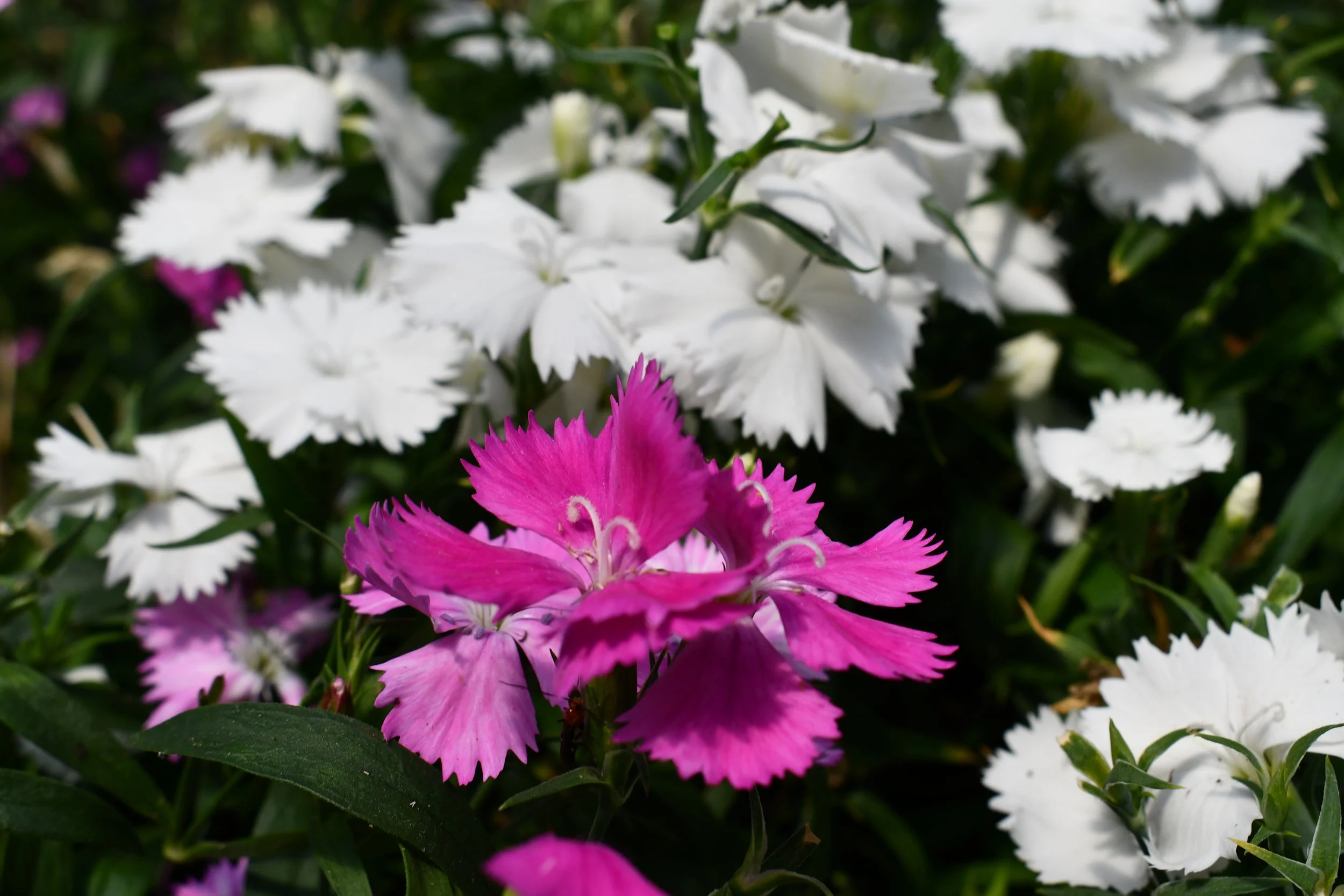
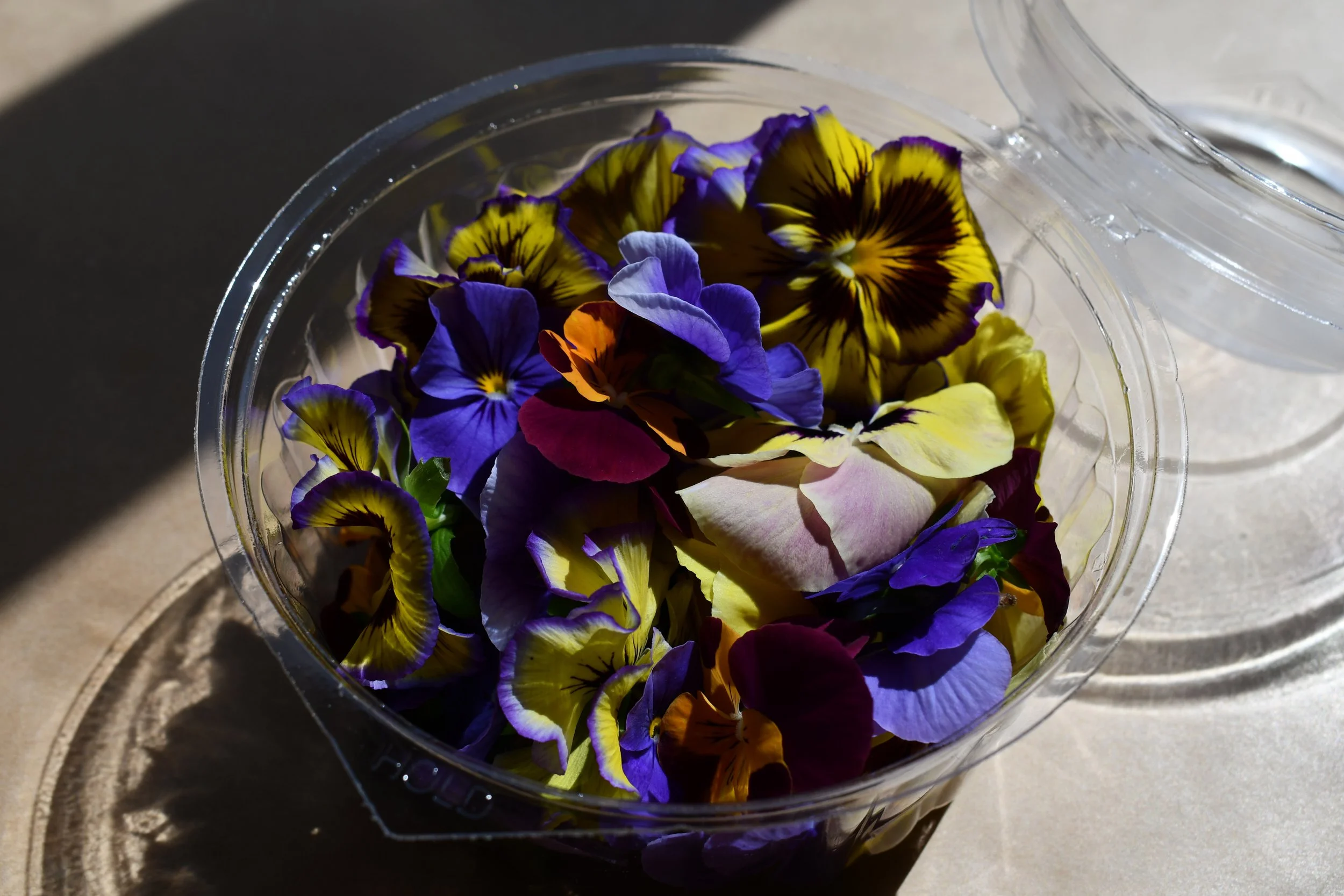
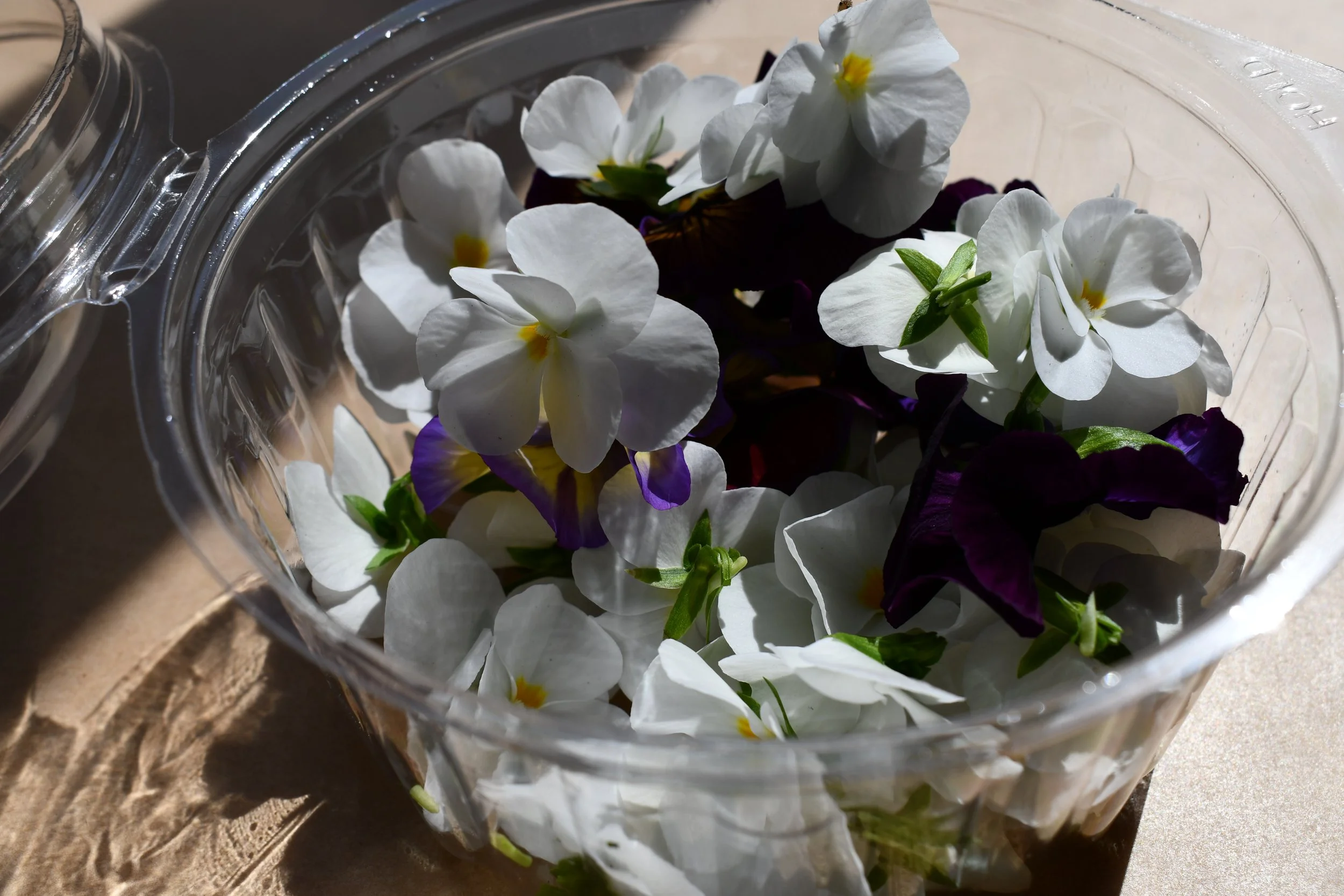
The edible flowers used at The Baker’s Duck are grown by Netty and Dave at The Cabarlah Flower Farm, just outside Toowoomba. Depending on the season, that might mean violas, pansies, cornflowers, French marigolds, calendula, nasturtiums, dianthus or snapdragons.
By the time one reaches our sourdough banana bread on the dine-in menu or a pastry in the cabinet, it may be the smallest ingredient in the finished dish. Getting it there, however, takes rather more work than its size suggests.
A 40-YEAR-OLD FARM AND A NEW CHAPTER
Netty and Dave took over the established flower farm after returning to Australia following many years in London.
Netty had worked on the team maintaining the gardens of Ham House, a 17th-century property managed by the National Trust. Dave came from a technology background.
Historic gardens and technology might not sound like preparation for the same job. On a flower farm, it turns out both are useful.
“We were looking for something a bit different that we could work on together for our next chapter, and, well, when we saw this established flower farm with a rich 40-year history producing locally grown flowers, we knew we'd found it.”
Edible flowers were already growing on the farm. Netty and Dave continued with them, gradually adding new varieties and extending the range.
FLOWERS THAT HAVE OPINIONS ABOUT THE WEATHER
The edible flowers grown in Cabarlah change throughout the year, largely because different varieties have very different ideas about acceptable weather.
“Many edible flowers, like violas, pansies and snapdragons, are cool-season plants that thrive from autumn through spring. Once the Queensland summer heat arrives, those become a challenge, so diversity is definitely key. Marigolds, cornflowers, nasturtiums, and dianthus handle the heat better.”
Cabarlah’s elevation brings cooler nights and less humidity than Brisbane, while the flowers still receive plenty of South East Queensland sunshine. It gives Netty and Dave opportunities to keep growing through the cooler months.
Queensland summer still has opinions, though. So does the hail.
“Yikes, they're something else!”
The result is that there isn’t one fixed selection arriving at The Baker’s Duck throughout the year. What appears on a pastry or plate depends, in part, on which flowers are happiest at the farm that week.
YES, YOU’RE SUPPOSED TO EAT THEM
Not every pretty flower belongs on a plate.
When something is being grown to eat, rather than simply arranged in a vase, how it has been treated becomes especially important.
“The most important thing is that since these flowers will be eaten, you mustn't use any unsafe pesticides.”
Netty and Dave recommend that home growers start edible flowers from seed rather than buying ornamental plants when they don’t know how those plants have been treated.
Their approach extends across the farm. They don’t use anything on their cut flowers that they wouldn’t be comfortable placing in a vase on their own kitchen bench.
Then there is the other frequently overlooked detail: edible flowers have flavour.
“They're not just pretty visual decorations, they can actually add sweetness, pepper and other distinct flavours.”
So yes, the flower is there to look good. But it is also an ingredient, and you are absolutely allowed to eat it.
FROM CABARLAH TO THE CABINET
At The Baker’s Duck, the flowers find their way onto pastries and dishes across our menu.
On our spring dine-in menu, they finish the sourdough banana bread, served with a quenelle of cinnamon butter, brûléed banana and chocolate granola.
Restraint was briefly considered.
For Netty and Dave, seeing where their flowers end up is part of the fun.
“Those pops of colour. Love it!”
Delivering flowers to a bakery does present one recurring problem.
“The trickiest thing we have when dropping off our flowers is deciding which of the pastries to try next!”
We can understand the dilemma.
By the time a viola lands on the banana bread or a pastry, the growing, weather watching and picking are out of sight.
It may be the tiniest local ingredient in our kitchen. It is also very often the first one you notice.
Discover more about Netty, Dave and The Cabarlah Flower Farm.
