
A croissant is a small thing to carry a four-day itinerary.
There it is in the cabinet, golden and apparently uncomplicated. But behind it are several overnight rests, carefully handled dough and a team paying attention long before breakfast.
“We have a four day process with our croissants at the Baker’s Duck,” explains Executive Chef Millie Dunn.
The first part begins with a starter. Our croissants use a semi-sourdough process with sourdough starter alongside wet yeast. The dough also includes baker’s white and spelt flour from Wholegrain Milling Co. and French butter chosen for laminated pastry.
These are familiar ingredients in the kitchen. Getting them to work together is where the four days come in.
The starter is given time to develop. The following day, the dough is made and rested overnight again. There is a rhythm to it: a stage of work, a period of waiting, then the next stage when everything is ready.
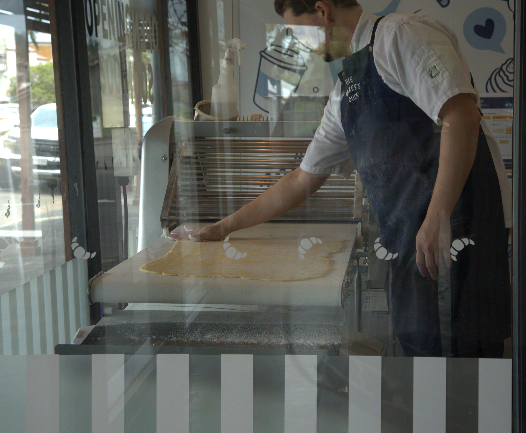
On the third day comes lamination. Sheets of butter and dough are folded together, building the layers that will become such a large part of the finished croissant’s texture.
The butter has a particular job here. It needs to move with the dough while keeping those layers distinct. In our butter video, Millie describes the French butter selected for this process:
“It’s more malleable. It just tastes great.”
Both are useful qualities. We are pleased to have them in the same ingredient.
After lamination, the pastries take their different shapes. This shared dough is the starting point for many of the things you see in our cabinet, before fillings and finishes give them their own character.
They then go into the prover, described in the video as “a fancy sauna”, and are given another overnight period to develop.
“And then day four, we bake them in the morning.”
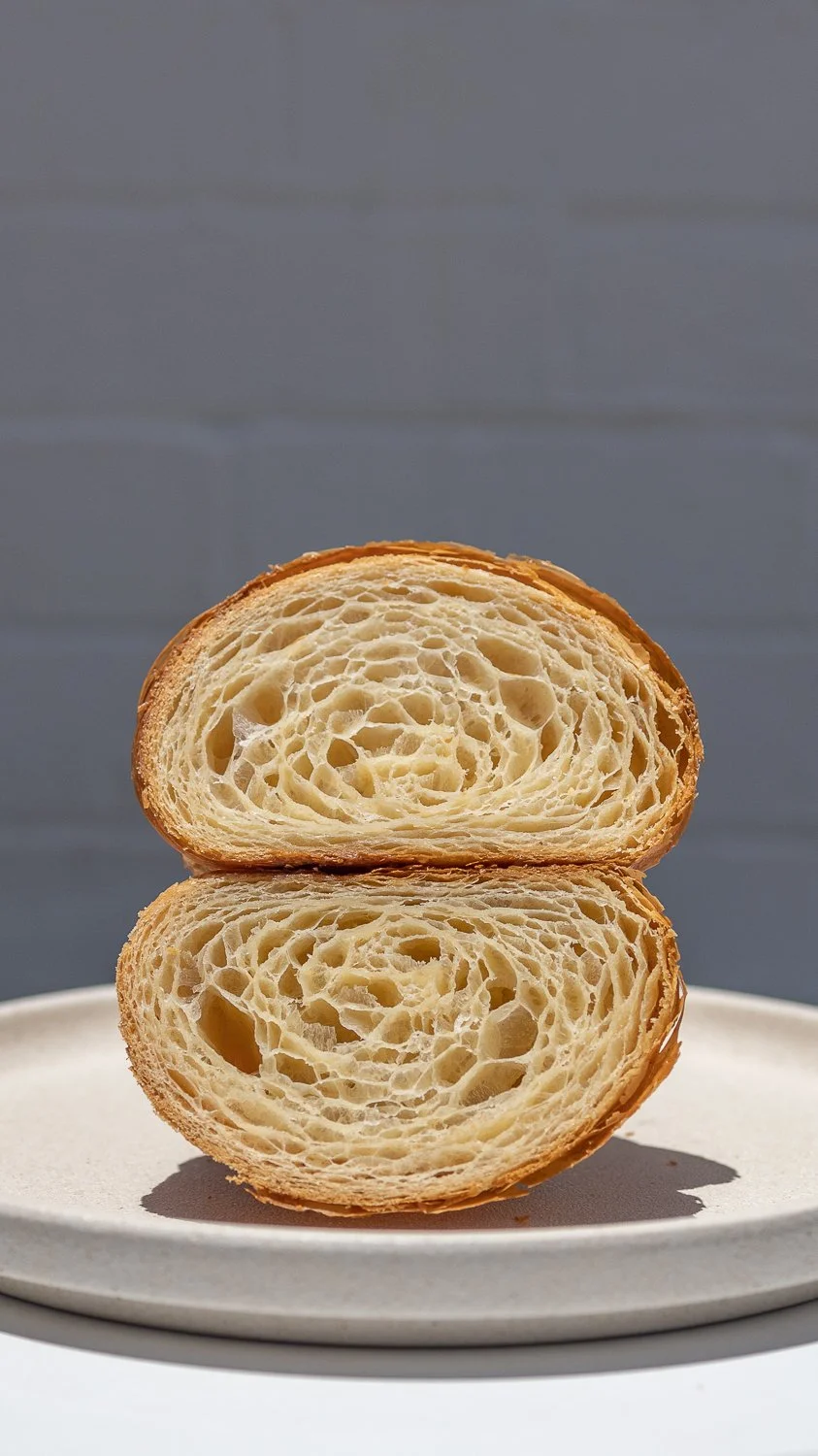
That is when all the earlier work becomes visible. The outside is crisp and flaky. Inside, the soft, open honeycomb gives the croissant its contrast. Pull one apart and you can see why those layers needed looking after.
The final reminder in the video is a simple one:
“You can’t take any shortcuts.”
That care is easiest to appreciate in a plain croissant. As Millie puts it:
“A plain croissant is one of the purest expressions of a bakery's craft. There's no filling, glaze or garnish to distract from the quality of the pastry itself.”
The crisp outside, the soft honeycomb centre and the flavour of the pastry have the floor. Everything those four days were working towards.
Four days of care, ready to go with your coffee.
